💰 Refer us a customer, Earn $2,000 💰



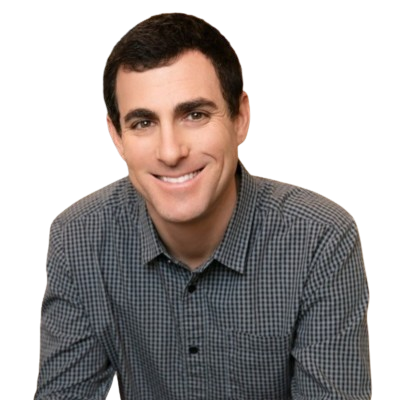
Tom Byer
Company
T3
Location
Tokyo, Japan
Bio
Tom Byer is recognized globally as a pioneer in grassroots football development and the creator of the groundbreaking Football Starts at Home® philosophy. His approach revolutionized how children are introduced to football by focusing on early childhood development—empowering parents to nurture skill, motivation, and confidence from the earliest stages of life.
Tom Byer is recognized globally as...
description
Company T3 was established in 2008 with the focus of educating Japanese school children to world of Soccer
Company T3 was established in 2008...
Follow the guest


Actionable Takeaways
It's Not a Coaching Problem — It's a Culture Problem:
The soccer world has spent decades blaming poor player development on coaching quality; Tom's core thesis is that the real differentiator between nations that produce world-class players and those that don't is culture — specifically whether children grow up in environments where touching a ball with their feet is normal before age 6, long before any formal coaching begins.
The Parent Is the Most Underutilized Asset in Sports Development:
In most countries, parents are seen as part of the problem and excluded from player development; Tom's research-backed insight is that parents are actually the most powerful developmental tool available — when a child ages 2-6 plays with a ball in an emotionally charged environment with a parent's attention and praise, deep learning and long-term memory formation occur simultaneously.
The Cerebellum Insight Changed Everything:
Dr. John Ratey's research revealed that the cerebellum — traditionally associated only with balance and coordination — is also responsible for thinking, memory, emotional regulation, decision making, literacy, and numeracy; ball mastery at early ages activates this region, which is why the Houston Dynamo/University of Houston study showed improved test scores — not just better soccer.
Program as Glue: Creating Partnerships That Wouldn't Normally Exist:
Soccer Starts at Home doesn't just sell a training methodology — it functions as a connector between organizations (federations, clubs, government ministries, brands) that wouldn't typically work together, creating stickiness and network effects that make every partnership more valuable than any single bilateral agreement.
The Decision Maker Rule: Get There First or Cut Your Losses:
After years of winning presentations that led nowhere, Tom learned that getting the actual decision maker in the room at the first meeting is the single most important variable in closing — if you can't access them in meetings one or two, the probability of success drops dramatically; his rule now is a 30-60 day window before walking away.
World Cup Years Are a Marketing Catalyst:
When countries fail to qualify for or underperform at the World Cup, the emotional and political pressure to find solutions creates a unique buying moment; Tom has attended five World Cup finals as an Adidas ambassador and knows the pattern — his phone rings when countries like Italy miss qualification for a third consecutive cycle.
You Can Have the Solution, but Without Amplification It's Worthless:
Tom's philosophy on media and reach: the best program in the world is meaningless if it can't reach the parents it's designed to activate; 14 years on Japan's top children's TV show, media deals in China and Australia, and brand partnerships are all part of the amplification strategy — always looking for the highest mountain peak with the biggest megaphone.
AI as a Proposal Accelerator for a Complex Enterprise Sale:
Tom's use of AI is practical and specific — the complex proposals he produces for federations, associations, and government ministries used to take days or weeks to architect; AI has compressed that substantially, freeing more time for the high-value in-person advocacy work that no tool can replace.
Conversation Highlights
Tom Byer, founder and president of T3, has spent 30+ years building one of the most unlikely and impactful sports development movements in the world — starting from a single soccer school in Tokyo in 1993 and growing it into a program now backed by Harvard Medical School, studied by Stanford and the University of Houston, and being requested by ministries of sports, education, and health across Asia, Africa, Europe, and the Americas. His thesis: the reason most countries never develop world-class soccer players isn’t coaching. It’s culture. And the solution isn’t a better training drill — it’s a parent, a child, and a ball.
Topics Discussed
- Tom’s origin story: Bronx/upstate New York → Tokyo in the mid-1980s → playing professional soccer in Japan → falling in love and staying
- Building Japan’s first specialized soccer school in 1993 — now grown to 150+ schools and 250+ employees across Japan
- “Soccer Starts at Home” (2015 book) — the philosophy built around parents as developmental assets, ages 2-6
- Foreword and Afterword by Dr. John Ratey of Harvard Medical School — neuropsychiatric validation
- The cerebellum connection: ball mastery at early ages develops the same brain region responsible for thinking, memory, emotion control, decision making, literacy, and numeracy
- University of Houston / Houston Dynamo study: improved test scores in literacy and numeracy
- Stanford University and Harvard professor research interest in the program
- It’s not a coaching problem, it’s a culture problem: only 8 countries have ever won the World Cup
- T3’s unique positioning as the “glue” that brings together federations, clubs, brands, and government ministries
- Brand partnerships: Nestle, Adidas (soccer ambassador), Volkswagen Group (China ambassador), AIA Insurance, Coca-Cola, McDonald’s, Domino’s Pizza
- Global advocacy work: Philippines (5 visits, 33 cities/islands with PFF president), Cambodia (met federation, 25 state associations, 3 ministries), China, Australia
- Media background: 14 years on Japan’s most popular children’s TV show (weekly soccer lessons)
- The sales lesson: always get the actual decision maker in the room from the first meeting
- World Cup 2026 as a tailwind — countries that fail to qualify become clients (Italy’s 3rd consecutive non-qualification)
- AI use: proposal and presentation drafting — saves weeks of work
- 2026 goal: use World Cup momentum to expand the movement globally