💰 Refer us a customer, Earn $2,000 💰

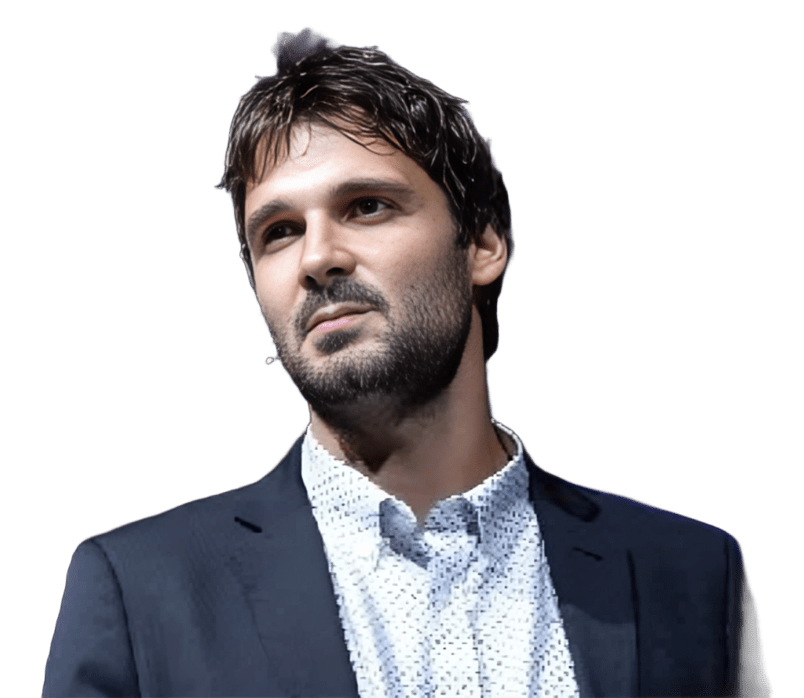

Pierre Miazga
Company
Ubisoft Bordeaux
Location
Bordeaux, Nouvelle-Aquitaine, France
Bio
Pierre Miazga is a marketing and communications leader in the video game industry, currently serving as Studio Marketing & Communication Director at Ubisoft Bordeaux. Public LinkedIn profile snippets indicate he is based in Bordeaux, France and studied at KEDGE Business School. His public posts and game credits show involvement in communications and studio visibility around major Ubisoft Bordeaux projects, including Assassin’s Creed Mirage and Assassin’s Creed Shadows.
Pierre Miazga is a marketing and...
description
Founded in 2017 by a small group of Ubisoft veterans, the studio has grown into a diverse community of nearly 400 talents representing 20 nationalities. Our teams contribute to Ubisoft’s flagship franchises, including Assassin’s Creed Mirage, which we led development on in 2023 alongside its expansion Valley of Memory, as well as Assassin’s Creed Shadows, released in 2025, and its additional content Claws of Awaji. Beyond delivering AAA productions, we foster innovation across the Group through dedicated areas of expertise focused on the Anvil engine and Online Services. The studio is also home to La Forge, our R&D hub where engineers and researchers collaborate to explore prototypes that help shape the games of tomorrow, particularly in the field of artificial intelligence. Located in the heart of the Bastide-Niel eco-district, we offer an inspiring and collaborative environment where talents are empowered to imagine, build, and evolve Ubisoft’s next-generation experiences and technologies.
Founded in 2017 by a small...
Follow the guest



Actionable Takeaways
Embed Marketing in Product Development, Not Just Launch:
Pierre's role begins at concept phase, not when the game nears completion. His job is to help developers understand "for whom they are building" rather than telling them what to build. This early involvement ensures audience needs are baked into the product from day one, avoiding the catastrophic risk of building something that doesn't resonate with any defined audience. For consumer marketers, this means inserting yourself into product conversations early, positioning your role as clarifying customer expectations and protecting tone consistency throughout development.
Differentiate Positioning from Advertising:
Pierre distinguishes between positioning work (internal, development-focused, understanding player needs and crafting what satisfies them) and advertising (external, campaign-focused, typically beginning 12 months pre-launch). Positioning is a collaborative document between development and marketing that defines what you're crafting and why. This separation ensures the product strategy is sound before spending resources on go-to-market tactics. Consumer marketers should advocate for formalized positioning documents that unite product and marketing teams around shared audience understanding.
Actively Protect Creative Ideas Through Development Complexity:
Pierre describes his role as helping "great ideas survive the complexity" of multi-year development. Video games—and many consumer products—face a fragility problem: initial brilliant concepts can get diluted over years of iteration, team changes, and competing priorities. Pierre combats this by maintaining rigorous tone consistency, ensuring every stakeholder speaks the same language about the project's fantasy and pillars. Consumer marketers should see themselves as guardians of the core product vision, regularly auditing whether development decisions stay true to the original creative intent.
Use Player Co-Creation for Validation, Not Just Feedback:
Ubisoft Bordeaux brings "normal players" into the studio under NDA before games are revealed, having them play and share perspectives. This isn't traditional user testing—it's continuous validation throughout development. Pierre emphasizes games are "built with players" through constant feedback loops. For consumer brands, this means establishing formal mechanisms for customer input during development (not just after launch), creating advisory panels, beta programs, or closed testing groups that provide ongoing reality checks on whether you're meeting needs.
Balance innovation with insider knowledge:
Pierre articulates a core tension: "You want to give players what they want, but you also want to surprise them." This balance is marketing's daily challenge—delivering on category expectations while creating emotional moments that exceed them. With Assassin's Creed Mirage, this meant honoring the franchise's core pillars while surprising fans with fresh creative choices. Consumer marketers should identify the non-negotiable expectations customers bring to your category, then engineer surprise elements that create delight without violating those core expectations.
Frame Your Role as Market Intelligence, Not Just Promotion:
Pierre's team includes data analysts who survey markets, extract player behavior data, read reviews on competitors' games, and synthesize YouTube comments. This intelligence function feeds directly into development decisions. Marketing isn't just responsible for messaging—it's responsible for bringing external market reality into internal product conversations. Consumer marketers should build systematic processes for gathering competitive intelligence, customer sentiment analysis, and behavioral data that inform product strategy, not just campaign strategy.
Accept That You're Competing for Attention, Not Just Market Share:
Pierre reframes competition: "We're not only competing against other games, we're competing for players' time—against TikTok, against Spotify." In an attention economy, your competition isn't just direct alternatives in your category. This mindset shift changes how you evaluate success and influences product decisions around engagement depth, session length, and value delivery. Consumer marketers must understand the full attention landscape their customers navigate and design experiences that justify the attention investment.
Build Cross-Functional Teams for Development Marketing:
Pierre's development marketing team mixes pure marketers with video artists, static artists, data specialists, and technical experts—unlike his previous publishing team of business school graduates. This structure reflects that embedded marketing requires fluency in multiple disciplines to effectively collaborate with creative, engineering, and production teams. Consumer brands doing complex product development should similarly structure marketing teams with diverse skill sets that mirror the cross-functional nature of product creation.
Design Positioning for Narrow Audiences, Accept Broad Outcomes:
Assassin's Creed Mirage was explicitly designed for franchise fans—a seemingly narrow audience. Pierre's team "forced ourselves to be authentic and true to our words. It is for the fans." They resisted the temptation to broaden messaging. Result: 10 million players. Pierre observes that "niches" are exploding—what seemed small can become massive when executed with authentic, consistent quality. Consumer marketers should resist the pressure to dilute positioning for imagined broader appeal, instead going deep on a defined audience and letting quality execution expand reach organically.
Create Hybrid Work Structures That Protect Creative Collaboration:
Bordeaux operates hybrid (2 days remote), but Pierre emphasizes that creative alignment conversations—especially tone definition—require in-person collaboration among creative directors, artistic directors, producers, marketers, and tech directors. This isn't about productivity theater; it's about ensuring complex, nuanced creative decisions involve real-time collaborative refinement. Consumer brands building creative products should be intentional about which conversations requir
Conversation Highlights
In this episode of The Future of Marketing, host Andres Figueira interviews Pierre Miazga, Studio Marketing and Communications Director at Ubisoft Bordeaux. Pierre reveals how AAA game marketing has evolved from traditional campaign-based promotion to embedded development marketing – where marketers function as “enablers” rather than sellers, working directly with creative teams from concept phase through launch. With Assassin’s Creed Mirage as a case study, Pierre unpacks how Ubisoft Bordeaux navigated the challenge of marketing a legacy title to hardcore fans in a market releasing 52 games per day, while maintaining creative risk-taking and authentic player relationships. His approach demonstrates how entertainment marketing can balance player expectations with creative surprise in an increasingly fragmented and competitive landscape.
Topics Discussed:
- Embedded marketing in game development vs. traditional go-to-market campaigns
- Marketing as “enabler” in creative development processes
- Navigating the saturated gaming market (20,000 Steam releases annually)
- Competing for player time, not just against other games
- Building games “from fans to fans” through direct player involvement
- Balancing player expectations with creative surprise
- The 3-4 year game development cycle and when marketing enters
- Cross-functional collaboration between marketing, creative, artistic, and technical teams
- Positioning vs. advertising in game development
- Managing tone consistency across multi-year development cycles